
Call: 08045801534
 Send Inquiry
GMP Reactors
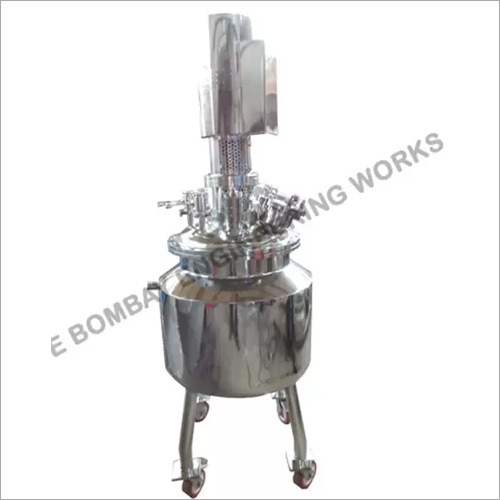

GMP Reactors Specification
- Product Type
- GMP Reactor
- General Use
- Industrial / Pharmaceutical / Chemical Processing
- Material
- Stainless Steel (SS316 / SS304)
- Type
- Vertical Reactors
- Capacity
- 50L - 20,000L
- Weight (kg)
- Custom, depends on capacity
- Computerized
- Yes / Optional
- Automatic
- Fully Automatic / Semi-Automatic
- PLC Control
- Yes / Optional
- Mixer Type
- Anchor / Propeller / Turbine
- Heating System
- Jacketed Heating (Steam / Electric / Thermal Oil)
- Shaft
- Single / Double Shaft
- Drive Type
- Electric Motor
- Voltage
- 220-440V
- Motor
- ABB / Siemens / Equivalent
- Dimension (L*W*H)
- Custom as per requirements
- Packaging Material
- Wooden Box & Wrapping Film
- Feature
- CIP/SIP Provision, Pressure & Temperature Control, Mirror/Matte Finish, GMP Compliance
- Color
- Natural Stainless Steel
- Control Panel
- Stainless Steel, Flame Proof / Standard
- Agitator Speed
- Variable (as per process requirement)
- Mounting Type
- Leg Mounted / Skid Mounted
- Insulation
- PUF/Glasswool with SS Cladding (if required)
- Connection Ports
- Multiple (Inlet/Outlet, Sampling, Vent, Drain, Safety Valve, Sensors)
- Application
- Pharmaceutical, Chemical, Biotechnology, Food & Beverage Industries
- Design Pressure
- Upto 10 Bar or as required
- Internals
- Baffles, Spray Ball
- Surface Finish
- Mirror Polished, Electro-polished or Matte Finish
- Sealing Mechanism
- Mechanical Seal / Gland Packing
- Stirring Power
- Customized based on volume and viscosity
- Inspection Ports
- Provided with Manhole, Sight Glass, Nozzle Arrangements
- Design Temperature
- Up to 250°C
About GMP Reactors
Product details
| Number of Wheels | 4 |
| Surface Finishing | Polished |
| Usage | Industrial |
| Material Grade | SS304 |
| Brand | bombayengg |
| Voltage | 415 |
| Dehumidifying Capacity | not applicable |
| Material | Stainless Steel |
| Usage/Application | Industry |
Precision Engineered for Compliance
GMP Reactors are built with strict adherence to Good Manufacturing Practice standards, ensuring reliable and hygienic operation for sensitive processes. Their construction from SS316 or SS304 guarantees resistance to corrosion and contamination, supporting pharmaceutical, chemical, and food industry applications. Customizable surface finishes further enhance cleanability and process integrity.
Versatile Design for Every Process Need
These reactors offer flexible configurations with variable agitation, multiple connection ports, and customizable volumes. Internals like baffles and spray balls optimize mixing efficiency, while optional insulation ensures energy savings and operator safety. Mounting options-including leg-mounted or skid-mounted bases-enable installation in diverse settings, from laboratories to large-scale manufacturing units.
Advanced Automation and Control
Featuring sophisticated control panels (standard or flameproof), GMP Reactors support both fully automatic and semi-automatic operations. PLC integration and computerized controls facilitate process monitoring, recipe management, and precise adjustment of parameters. Compatibility with major motor brands, such as ABB and Siemens, reinforces reliability and operational flexibility.
FAQ's of GMP Reactors:
Q: How can GMP Reactors be customized for different process requirements?
A: GMP Reactors are highly customizable in terms of capacity (50L-20,000L), agitator type, surface finish, mounting style, and connection ports. Design pressure, temperature, and stirring power can be tailored to specific processes, while features like PLC control, automated operation, and insulation are available as per client needs.Q: What benefits do mirror polished or electro-polished finishes provide in GMP Reactors?
A: Mirror and electro-polished finishes enhance cleanability, reduce contamination risk, and facilitate compliance with GMP standards. Such surfaces are easier to sterilize and inspect, making them ideal for pharmaceutical, biotechnology, and food processing where product purity is crucial.Q: When should the agitator speed and type be adjusted in reactor operations?
A: Agitator speed and type (anchor, propeller, or turbine) should be selected based on the viscosity, volume, and nature of the process. Variable-speed drives allow operators to optimize mixing, heat transfer, and reaction rates for specific formulations, improving product consistency and yield.Q: Where are these GMP Reactors typically installed and used?
A: GMP Reactors are commonly installed in pharmaceutical plants, chemical manufacturing facilities, biotechnology labs, and food and beverage production units. They can be mounted on legs or skids, adapted for on-site process requirements, and integrated with existing utilities for heating, cooling, and control.Q: What processes and reactions can be carried out using these reactors?
A: These reactors support mixing, chemical synthesis, fermentation, heating, cooling, and solvent recovery processes. Equipped with precision controls and advanced internals, they are suitable for a broad spectrum of industrial and laboratory applications, from small batch production to large-scale continuous processing.Q: How does the sealing mechanism and insulation contribute to safe operation?
A: Options for mechanical seals or gland packing ensure secure containment of reactive substances and prevent leaks during operation under high pressure or temperature. Insulation (PUF/Glasswool with SS cladding) minimizes heat loss, protects operators from hot surfaces, and improves energy efficiency.Q: What are the key usage benefits of opting for fully automated or PLC-controlled reactors?
A: Fully automated and PLC-controlled reactors enable precise monitoring and adjustment of reaction parameters, improving repeatability and reducing manual errors. These controls streamline complex process steps, enhance safety, and facilitate regulatory compliance with electronic data records.Price 75000 INR/ Unit
 Get Latest Price
Tell us about your requirement

Price:
Quantity
Select Unit
- 50
- 100
- 200
- 250
- 500
- 1000+
Additional detail
Mobile number
Email

More Products in Reactors Category
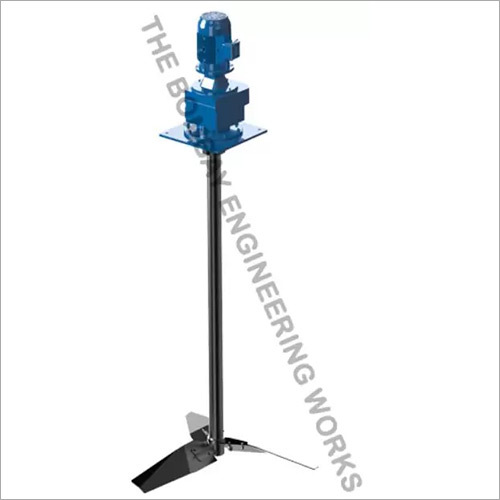
Agitator .
Price 34000 INR
Automatic : No
PLC Control : Other, Optional
Mixer Type : Other, Paddle / Turbine
Color : Other, Silver
General Use : Industrial Mixing

Contact Details
THE BOMBAY ENGINEERING WORKS
GST : 27AAAFB1932C1Z4
- Unit no 9, Unity Industrial Estate, Naikpada, Village Valiv, Vasai EastVasai - 401303, Maharashtra, India
- Phone :08045801534
 Send Inquiry
|


Developed and Managed by Infocom Network Private Limited.
