
Call: 08045801534
 Send Inquiry
Centrifuges .
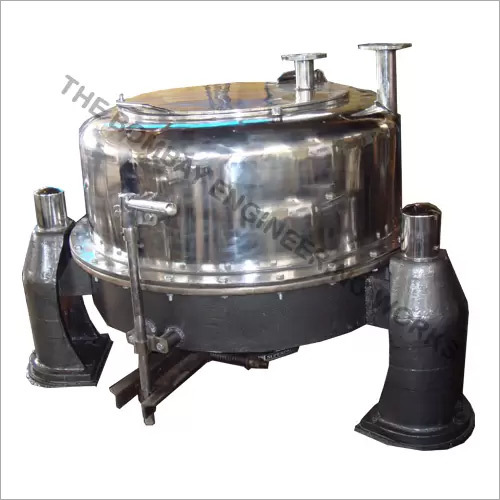

Centrifuges . Specification
- Product Type
- Centrifuge
- General Use
- Separation of solids from liquids, laboratory and industrial applications
- Material
- Stainless Steel
- Type
- Top Discharge or Bottom Discharge available
- Capacity
- 5 L to 150 L
- Weight (kg)
- Varies by model (Approx. 85 - 800 kg)
- Computerized
- No
- Automatic
- Semi-Automatic
- PLC Control
- Optional
- Heating System
- Not Included
- Shaft
- High Strength Steel Shaft
- Drive Type
- Belt Drive or Direct Drive
- Voltage
- 220V/380V, 50Hz/60Hz
- Motor
- Heavy-duty induction motor
- Dimension (L*W*H)
- Model dependent (typical L*W*H: 1150*800*910 mm)
- Packaging Material
- Export Quality Wooden Packaging
- Feature
- High-speed operation, corrosion-resistant, low maintenance
- Color
- Metallic Silver or as required
- Application Areas
- Pharmaceutical, Chemical, Food processing, Textile, Dairy, Laboratory research
- Basket Diameter
- 300 mm to 800 mm
- Installation
- Onsite support available
- Basket Speed
- Up to 3000 RPM
- Discharge System
- Manual, Scraper, Scoop
- Moisture Content After Separation
- Low (depends on material processed)
- Safety Features
- Fully covered body, dynamic and static balancing, safety interlocks
- Noise Level
- < 75 dB(A)
- Control Panel
- Start/Stop, timer, speed control (Manual or PLC based)
About Centrifuges .
Product details
| Basket Height | 178 mm (7") |
| Centrifugal Force | 510 G |
| Height | 900 mm Approx |
| Length on Motor Side | 1000 mm Approx |
| Model Number | 14 Pilot Plant |
| Width | 800 mm Approx |
| Working Capacity Under Lip | 10 Lts |
| Basket Diameter | 355 mm (14") mm |
| Motor Power | 2 HP |
| Basket Speed | 1600 rpm |
Efficient and Safe Separation
The centrifuge delivers high-performance separation with low residual moisture, ensuring processed materials are ready for further applications. Safety features such as a fully covered body, balancing systems, and interlocks minimize risks during operation. Noise levels remain at a comfortable <75 dB(A), making it suitable for laboratory and industrial settings.
Tailored for Multiple Industries
With adaptability for pharmaceuticals, chemicals, food processing, textile, dairy, and research labs, these centrifuges suit diverse operational requirements. Models vary in capacity from 5 to 150 liters, and specialized discharge systems accommodate both manual and automatic processes. Stainless steel construction ensures corrosion resistance and durability in demanding environments.
Advanced Control for Precision
Whether manual or PLC-based, the control panel provides accurate management of start/stop functions, speed adjustment, and operation timing. Users may opt for advanced semi-automatic processes for improved consistency and dependability, adjustable according to individual workflow demands.
FAQ's of Centrifuges .:
Q: How does the centrifuge achieve low moisture content after separation?
A: The centrifuge operates at basket speeds up to 3000 RPM, utilizing centrifugal force to efficiently separate solids from liquids. The precise spinning action, combined with multiple discharge options, ensures residual moisture remains low, though the final content depends on the type of material processed.Q: What safety features are included with these centrifuges?
A: Safety is prioritized with a fully covered body, dynamic and static balancing, and multiple safety interlocks. These features prevent accidental exposure to moving parts and reduce operational hazards, ensuring safe usage in both laboratory and industrial environments.Q: When is onsite installation support provided for these centrifuges?
A: Onsite installation support is available upon delivery, helping users set up and commission the centrifuge correctly. Our technical team assists with assembly, calibration, and provides operational guidance to ensure optimal performance from day one.Q: Where are these centrifuges best used?
A: These centrifuges are ideal for pharmaceutical, chemical, food processing, textile, dairy, and laboratory research applications. Their versatility and range of capacities make them suitable for both small-scale and large-scale separation tasks.Q: What is the process for controlling centrifuge operations?
A: Depending on the selected model, operations are controlled via a manual or PLC-based control panel. Functions include start/stop, timer, and speed adjustment, allowing users to fine-tune the separation process according to material and application needs.Q: How does the discharge system work and what types are available?
A: Centrifuge models feature top or bottom discharge systems, with options for manual, scraper, or scoop-based discharge. These mechanisms facilitate efficient removal of separated solids, accommodating varying operational preferences and materials.Q: What are the key benefits of using these centrifuges in industrial and laboratory environments?
A: Key advantages include high-speed separation, low maintenance, corrosion resistance, and versatility across a wide range of applications. These centrifuges provide reliable performance, consistent results, and support semi-automatic operations, enhancing productivity and operational safety. Get Latest Price
Tell us about your requirement

Price:
Quantity
Select Unit
- 50
- 100
- 200
- 250
- 500
- 1000+
Additional detail
Mobile number
Email


Contact Details
THE BOMBAY ENGINEERING WORKS
GST : 27AAAFB1932C1Z4
- Unit no 9, Unity Industrial Estate, Naikpada, Village Valiv, Vasai EastVasai - 401303, Maharashtra, India
- Phone :08045801534
 Send Inquiry
|


Developed and Managed by Infocom Network Private Limited.
