
Call: 08045801534
 Send Inquiry
Shampoo Manufacturing Plant
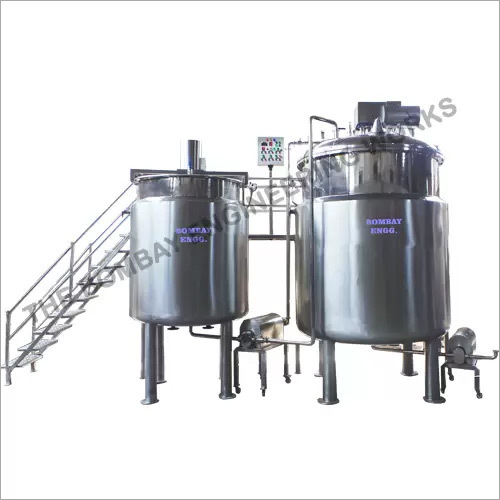

Shampoo Manufacturing Plant Specification
- Product Type
- Shampoo Manufacturing Plant
- General Use
- Industrial Shampoo Manufacturing
- Material
- Stainless Steel (SS 316/304)
- Type
- Fully Automatic Plant
- Capacity
- 250 Ltr to 10,000 Ltr (customizable)
- Weight (kg)
- Standard as per capacity
- Computerized
- Yes
- Automatic
- Yes
- PLC Control
- Available (Optional)
- Mixer Type
- Agitator/Homogenizer/Multi-Shear Mixer
- Heating System
- Steam/Electric Heating Jacketed
- Shaft
- SS Shaft with Sealing
- Drive Type
- Motorized Drive
- Voltage
- 220V/380V, 50/60 Hz
- Motor
- Electric motor, power as per plant size
- Dimension (L*W*H)
- Custom as per plant size
- Packaging Material
- SS/Plastic Drums/Bottles
- Feature
- Corrosion resistant, Easy cleaning, Efficient mixing, CIP/SIP supported
- Color
- Silver (Stainless Steel Finish)
- Cleaning System
- CIP (Clean-In-Place) Automated
- Working Temperature
- Ambient to 90°C (Adjustable)
- Vessel Configuration
- Mixing, Manufacturing, Storage Tanks
- Level Indicator
- Magnetic/Glass level gauge
- Product Discharge
- Bottom valve with sanitary fitting
- Agitator Speed
- Variable (with VFD control)
- Utilities Required
- Power, Steam, Water supply, Compressed air
- Finish
- Mirror/Matt Polish inside, Matt Polish outside
- Connection Ports
- Tri-clamp, SMS standards
- Service Platform
- Available for operation and maintenance
- Working Pressure
- Atmospheric or up to 2 bar
- Control Panel
- Digital/PLC-based with touch screen
- Safety Features
- Overload protection, Pressure safety valve, Emergency stops
About Shampoo Manufacturing Plant
Product details
| Frequency | 50 Hz |
| Max Production Capacity | 20000 ltrs / batch |
| Min Production Capacity | 200 Ltrs to / batch |
| Type | Automatic |
| Material | SS316 |
| Phase | 3 phase |
| Power Source | Electric |
| Automation Grade | Fully Automatic type |
| Brand | BOMBAYENGG |
| Production Capacity | 25 units |
Advanced Automation for Consistent Quality
The plant is fully automatic, integrating PLC controls and touch screen operation for precise process management. This ensures consistent product quality batch after batch, with the flexibility to adjust parameters like temperature and mixing speed. Automated cleaning and monitoring further enhance productivity and hygiene standards.
Hygienic Design for Safe Production
All vessels and piping are constructed using SS 316/304 stainless steel with mirror/matt finishes to facilitate easy cleaning and minimize contamination risks. Integrated CIP (Clean-In-Place) systems ensure thorough sanitation without manual intervention, supporting high standards for cosmetic manufacturing.
Customizable Capacity and Efficient Utility
With capacities ranging from 250 Ltr to 10,000 Ltr, the plant suits diverse production needs. Utility connections for power, steam, water, and compressed air are designed for efficient use. The multi-shear agitator, steam/electric heating options, and variable speed motorized drive guarantee uniform mixing and optimal heating, regardless of batch size.
FAQ's of Shampoo Manufacturing Plant:
Q: How does the shampoo manufacturing plant ensure hygienic production?
A: The plant is equipped with CIP (Clean-In-Place) automated systems and constructed from SS 316/304 stainless steel with sanitary fittings and mirror/matt finishes. These features facilitate easy cleaning, prevent contamination, and maintain high hygiene standards throughout the manufacturing process.Q: What is the process flow in the shampoo manufacturing plant?
A: Raw materials are loaded into mixing vessels, where variable speed agitation ensures homogenous blending. Heating systems maintain required temperatures (ambient to 90C), and the PLC control panel regulates all parameters. After mixing and manufacturing, the product is transferred via sanitary bottom discharge valves to storage tanks or directly to the packaging line. Cleaning is automated with the CIP system.Q: When is the plant suitable for use and what industries benefit most?
A: The plant is ideal for continuous and batch production of shampoo and other personal care products. It serves manufacturers, exporters, and suppliers in the cosmetic, toiletry, and pharmaceutical sectors, especially those requiring a customizable, automated solution for high-quality production.Q: Where can this shampoo manufacturing plant be installed?
A: Designed for industrial use, the plant can be installed in facilities such as factories, contract manufacturing units, and export-oriented plants across India or internationally. Dimensions and utility connections are customizable as per site specifications and production requirements.Q: What benefits does PLC-based control provide to manufacturers?
A: Digital PLC-based control with touch screen offers precise monitoring, programmable automation, and real-time adjustments for temperature, mixing speed, and process timing. This results in improved consistency, reduced human error, and enhanced production efficiency.Q: How does the plant handle heating and mixing requirements?
A: The plant features steam or electric heating jackets capable of adjustable temperatures up to 90C, and variable frequency drive (VFD) controls for the agitator mechanism. Mixer types include agitators, homogenizers, or multi-shear mixers, delivering effective blending and heat distribution for diverse shampoo formulations.Q: What safety features protect operators during shampoo production?
A: Safety measures include overload protection, pressure safety valves, emergency stop buttons, and secure service platforms for operation and maintenance. These precautions ensure operator safety during routine use and maintenance activities. Get Latest Price
Tell us about your requirement

Price:
Quantity
Select Unit
- 50
- 100
- 200
- 250
- 500
- 1000+
Additional detail
Mobile number
Email


Contact Details
THE BOMBAY ENGINEERING WORKS
GST : 27AAAFB1932C1Z4
- Unit no 9, Unity Industrial Estate, Naikpada, Village Valiv, Vasai EastVasai - 401303, Maharashtra, India
- Phone :08045801534
 Send Inquiry
|


Developed and Managed by Infocom Network Private Limited.
